Natural gas and propane are used for water heaters, stoves, dryers and furnaces. A leak can lead to fire or an explosion, so the rules are simple. Do not look for the leak yourself, do not touch switches and get everyone out.
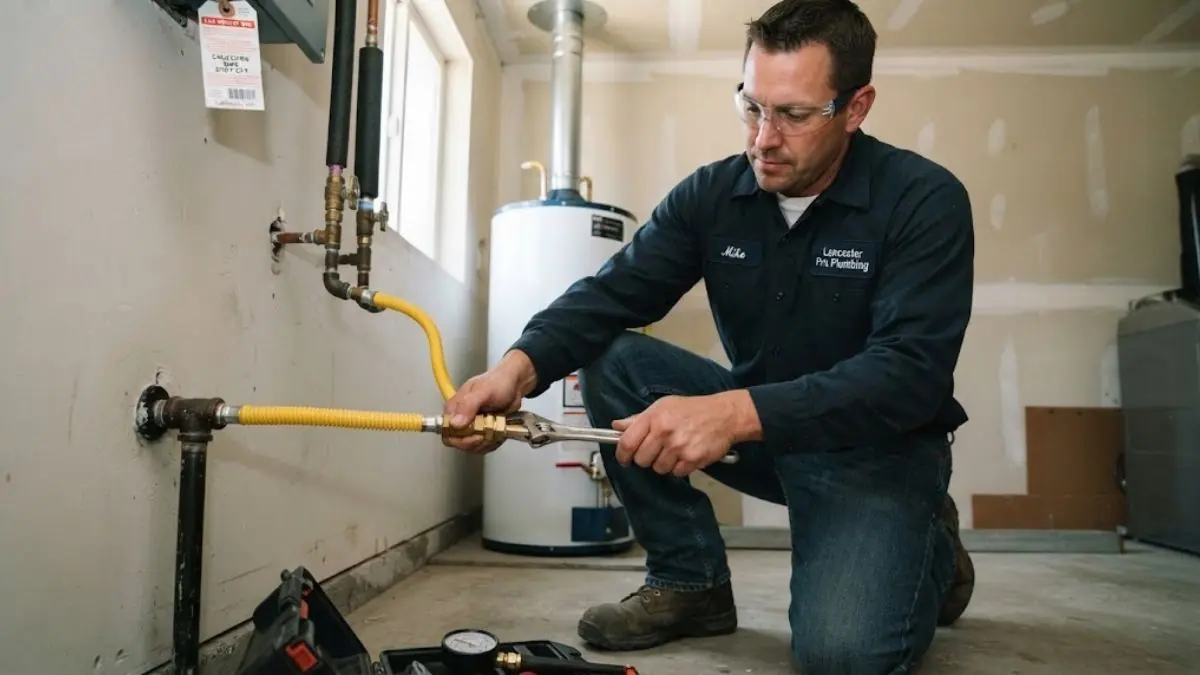
This guide explains the clues and the correct order of calls. It also covers the part a plumber plays, such as checking a water heater's gas connection once the area is safe.
Signs of a gas leak
- A rotten egg smell. Utilities add a smelly chemical to natural gas so you can notice it.
- A hissing or whistling sound near a gas line or appliance.
- Dead or dying plants near a buried gas line.
- Bubbles in standing water or mud near a pipe.
- Physical symptoms such as dizziness, headache or nausea that ease when you leave the building.
What to do right away
- Stop what you are doing. Do not use switches, lighters, phones or anything that can spark inside.
- Get everyone, including pets, out of the building and away from it.
- Call 911 and your gas utility's emergency line from outside.
- Stay out until responders say it is safe.
- Do not turn the gas back on yourself.
What not to do
Do not try the soap and water test while the smell is strong. Do not relight a pilot. Do not start a car in an attached garage. Do not assume a faint smell is harmless. If you smell gas, treat it as real.
Where a plumber fits in
A gas leak is handled first by the utility and emergency responders. After the area is safe, a licensed contractor can inspect, repair or replace a leaking appliance connection and test the line. If the source is a water heater, our water heater repair team can inspect the unit. If it needs replacing, see water heater replacement.
Gas line installation is not one of the services listed on this site. If a repair involves it, we tell you what is needed and who should do it.
Appliances that use gas at home
- Water heaters, tank and tankless.
- Stoves, ovens and cooktops.
- Clothes dryers.
- Furnaces and fireplaces.
- Outdoor grills, pool heaters and generators.
Propane and natural gas differ slightly
Natural gas is lighter than air and tends to rise. Propane is heavier and tends to collect low, in basements, crawlspaces or low areas around tanks. Both have the added odor. Propane tanks have their own safety rules, and the supplier handles leaks at the tank or regulator.
If you smell either one, the response is the same. Get out and call from a safe place.
After responders clear the building
Do not re-enter until you are told it is safe. The gas utility or responders may shut off the meter. A licensed contractor must repair the leak, and the utility restores service. If a water heater was the cause, replacement may need a permit, and we explain the process through our water heater replacement page.
Teaching the household what to do
Everyone in the home should know the smell and the plan. Pick a meeting place outside, tell children not to touch switches and keep the numbers for 911 and your gas provider saved in each phone. Review it twice a year, such as when the clocks change.
Renters should know who to call, whether it is the utility, the landlord or both. Ask for the building's emergency number.
Detectors and what they can and cannot do
A gas detector can give early warning, but it is not a replacement for the smell and for common sense. Natural gas detectors mount higher on a wall, while propane detectors mount low. Place them according to the instructions and test them regularly. Replace them at the interval the manufacturer gives.
Gas odor that is not a leak in your house
Sometimes the smell comes from outside, such as a utility working on a main, a neighbor's leak or a pilot light that blew out on a grill. The response is the same. Leave, report it and let the utility find the source. Do not assume it is someone else's problem.
Also remember that a sulfur smell from drains can come from a dry trap or bacteria in a water heater, not from gas. If the smell is stronger near a floor drain or a water heater tank and there is no hissing, run water in the drain and call us for the heater. When in doubt, treat it as gas first.
Keeping appliance connections in good shape
Flexible gas connectors age, kink and corrode. If you move an appliance or a connector looks cracked, rusted or bent, have it replaced. Never use tape or thread sealant that is not rated for gas. A licensed contractor tests the joint after the work, and that final check is what makes the repair trustworthy.
Getting service restored
After a leak, the utility often has to inspect before gas is turned back on, and a repair may require a permit and a pressure test. Ask the utility what it needs from you and give it the contractor's written description of the repair. Keep the paperwork for your records and your insurer.
Prevention and everyday checks
- Install a gas detector near gas appliances and test it monthly.
- Have gas appliances inspected on a regular schedule.
- Keep flammable items away from water heaters and stoves.
- Learn where your gas shutoff is and make sure everyone knows.
Know your fuel before something happens
Plantation homes may use natural gas, propane or electric appliances, so the first step is to know which you have. Look at your utility bills for your gas provider and save its emergency number in your phone. The City of Plantation's Building Safety division handles permits for contractor work like water heaters.
If you live near the line in Sunrise or Lauderhill, the same rule applies. Find your provider's emergency number now and keep it with your other contacts.
Call the line, describe it, and we will say whether it can wait.
Gas leak questions
Leave the building, then call 911 and your gas utility's emergency number from outside.
After the area is safe, a licensed contractor can inspect appliance connections. The utility or responders come first.
No, but sparks can ignite gas. That is why you avoid switches and phones inside.
Check your gas bill or the meter outside. If you have a propane tank, the supplier's name and number are on the tank or the contract.