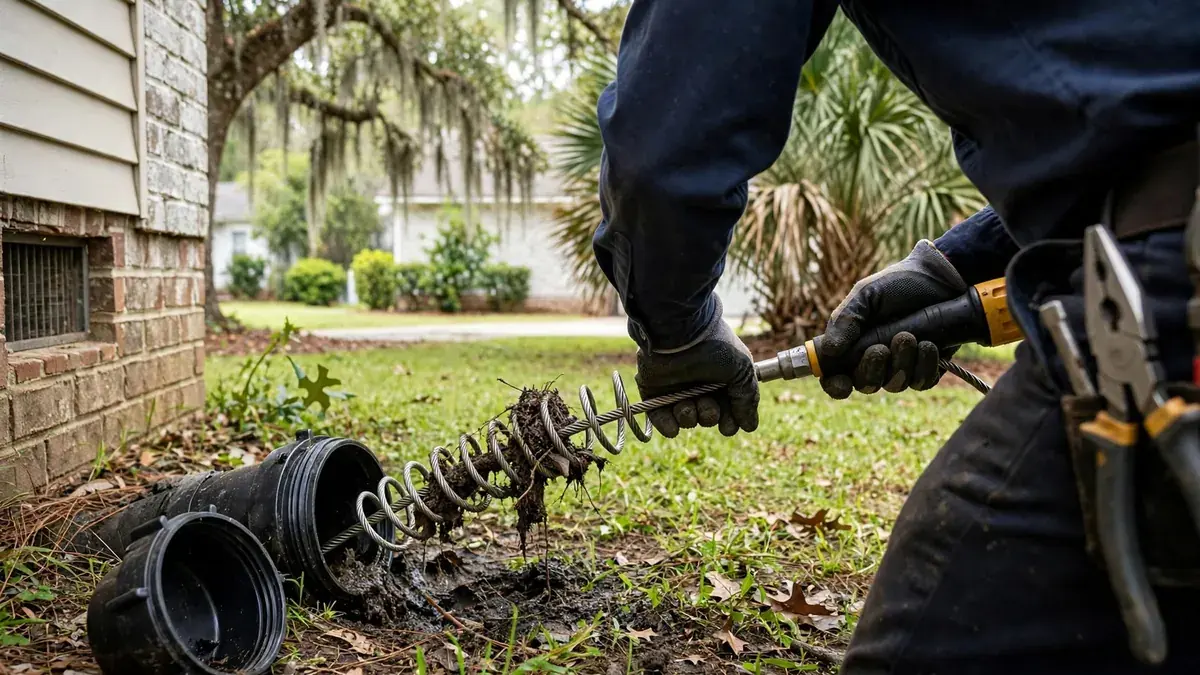
A fully stopped drain is an emergency in a home with one bathroom, and it is worse in a rental with a tenant waiting on you. We clear kitchen lines, bathroom branches, laundry standpipes and the main line that carries everything out to the street.
Most Plantation calls begin the same way. Water sits in the tub after a shower, or the kitchen sink only drains when the dishwasher is off. Describe it on the phone and we can usually tell whether the clog sits in one fixture or in the shared line.
What to do in the first few minutes of a drain emergency
Stop running water into the system. Every flush or rinse sends more liquid toward a line that has nowhere to put it, and that is how a slow tub becomes a wet bathroom floor.
Please skip the bottle of chemical drain opener. It sits in a blocked pipe, it can burn skin when the plumber opens the trap, and it rarely cuts through a real obstruction. Cover floor drains with a towel and call us.
- Turn off the dishwasher and washing machine if the kitchen or laundry line is slow.
- Move rugs and cardboard away from any drain that is gurgling or bubbling.
- Note which fixtures are affected, because that tells us how far down the line the clog sits.
How we clear the line
The tool depends on what the blockage is made of and where it sits. A hand auger handles a hair clog in a tub trap. A cable machine reaches a kitchen branch or a laundry line. For grease and heavy buildup, we move up to hydro jetting, which scours the pipe wall instead of poking a hole through the middle.
- We ask where the water backs up and test the nearby fixtures to place the clog.
- We open a cleanout or pull a trap, then run the cable or jetter until the line flows freely.
- We flush the line with water, confirm it drains at full speed, and explain what we found.
Why drains clog around Plantation
Kitchen lines fill with cooking grease and food paste. Bathroom lines collect hair, soap scum and the wipes that are labeled flushable but are not. Laundry standpipes clog with lint. Homes built during the city's fast growth between the 1970s and the 1990s often have long runs under slabs, and a slow line there can hide a bigger problem.
Where the blockage sits also changes who has to fix it. Plantation Utilities maintains about 197 miles of gravity sewer main, and your house line connects to that system. We locate the clog first so you know whether it is a house-side problem before anyone cuts into a yard.
| Symptom | Likely cause | Usual method |
|---|---|---|
| One sink drains slowly | Hair, soap or food in the trap or branch | Hand auger or trap cleaning |
| Two fixtures back up together | Blockage in the shared branch line | Cable machine from a cleanout |
| Toilet gurgles when the tub drains | Partial blockage in the main drain | Cable machine, then camera if it returns |
| Same drain clogs every few months | Grease layer, roots or a damaged pipe | Hydro jetting and camera inspection |
When the same drain keeps stopping up
A line that clogs again within weeks is telling you something. Roots in a clay or cast iron lateral, a bellied section that holds water, or a cracked joint will all catch debris no matter how often the pipe is cleared. A short camera run shows the inside of the pipe in real time, and that picture decides whether you need a cleaning schedule or a repair.
If the camera finds damage, we explain the options for sewer line repair before you commit to anything.
Kitchen, bathroom and laundry lines are different
Kitchen lines carry grease, so they clog with a waxy film that narrows the pipe over months. Bathroom lines carry hair and soap, which knit into a mat just past the trap. Laundry lines carry lint and detergent residue, and a standpipe that is too short can overflow when the washer drains.
Knowing which line is slow lets us bring the right tool on the first trip, so tell us which fixture first complained.
Codes and permits for this work
Plumbing in Florida is governed by the Florida Building Code, Plumbing, which is based on the International Plumbing Code (IPC). In practice, clearing a drain does not usually need a permit, but any pipe we replace must meet the plumbing code. If you want to know what applies to your address, ask the dispatcher and we explain it before the visit.
What affects the cost of drain cleaning
We do not quote a figure over the phone without knowing the problem, because the same call can be a ten minute trap cleaning or a long cable run.
- Where the clog sits
- A fixture trap is quick. A main line forty feet from the cleanout takes more time and heavier equipment.
- Access to the pipe
- A working cleanout speeds the job. If none exists, the plumber may need to pull a toilet or open a vent.
- Pipe size and material
- Cast iron with scale, clay with roots and PVC with a grease coat all respond to different tools.
- Camera work
- Adding a camera pass for a repeat clog increases the visit, and it often saves a second call.
You get the price before work starts, and you decide whether to go ahead.
Want your real number? Call (954) 697-4920 and describe the problem.
Call the dispatch line and describe what you see. We will tell you what happens next.
Drain cleaning questions from Plantation homeowners
It is when it is the only toilet or the main line, when sewage is coming up through a floor drain, or when water is reaching flooring. Call right away in those cases and we dispatch at any hour. A slow single sink can usually wait for the next available appointment.
Yes. The dispatch line is staffed 24 hours a day, and we send a plumber the same day when a crew is available. Tell us what is backing up so we can bring the right equipment.
Done with the right tool, no. We match cable size and jetting pressure to the pipe, and we avoid aggressive cutting on older cast iron. If a pipe looks fragile on camera, we tell you before we continue.
Wipe pans before washing, keep grease out of the sink and run hot water after use. A line that still slows down every month usually has a grease layer that needs jetting, not another bottle of cleaner.