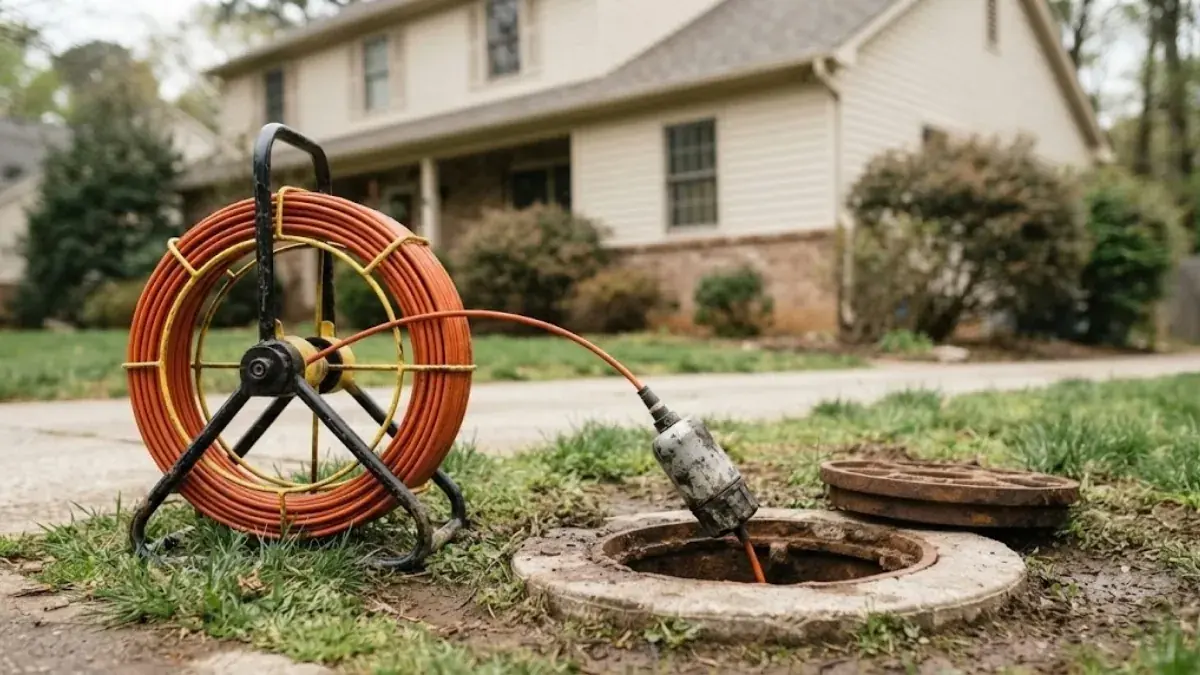
Guessing at a sewer problem leads to wrong repairs. A camera inspection puts a waterproof lens inside the line and sends the picture to a monitor, so you and the plumber look at the same thing.
It is worth doing before a home purchase, after repeat clogs and whenever a repair is being planned.
What the camera can show
- Cracks, broken sections and offset joints.
- Roots entering at joints or through breaks.
- Bellies where the pipe sags and holds water.
- Heavy grease, scale or debris buildup.
- Collapsed or crushed sections of older pipe.
- The location and depth of each issue, marked on the ground when needed.
When an inspection makes sense
Buying an older home is a strong reason. Plantation grew fast from the 1970s through the 1990s, and many homes from that era have original drain lines. A camera shows what a home inspector cannot see from the surface.
It also helps when a drain clogs again and again, when a yard stays wet with no irrigation reason, or before you commit to a major sewer repair. Our sewer line repair page covers what happens after a problem is found.
How an inspection works
- We find an access point, such as a cleanout or a pulled toilet.
- We feed the camera through the line and watch the monitor as it travels.
- We note defects and their distance from the access point and locate them from above ground.
- We review the footage with you and explain what needs action and what can wait.
What you receive afterward
You get a plain description of what we saw and a recommendation. If the line is clean and sound, we say so. If a section needs work, we point out exactly where and explain the options. If cleaning is the first step, we may pair the visit with hydro jetting or cable cleaning.
Inspection before buying a house
A home inspector looks at what is visible. A camera shows what is not. If you are buying an older house, a sewer scope can reveal roots, bellies and breaks that would cost a lot to repair later. Share the findings with your agent and use them to negotiate or to plan the work.
Ask the seller for access to the cleanout, and tell us the closing timeline so we can schedule around it.
How to read the findings
Minor scale or a small offset may need no action. Roots at a joint call for cleaning and monitoring. A crack or a bellied section holds water and will clog repeatedly. A collapse needs repair. We rank each finding as urgent, soon or watch, so you know where to spend first.
Preparing for the inspection
Clear access to the cleanout. Tell us if you have seen problems or past repairs. If you are in a condo or shared building, ask your association about the cleanout location. Avoid running large amounts of water during the inspection, and plan to be home so we can show you the footage as we go.
Codes and permits for this work
Plumbing in Florida is governed by the Florida Building Code, Plumbing, which is based on the International Plumbing Code (IPC). In practice, a camera run needs no permit, but what it finds may lead to a repair that does. If you want to know what applies to your address, ask the dispatcher and we explain it before the visit.
What affects sewer inspection cost
Inspection is quoted by the effort needed to reach and cover the line.
- Access point
- A cleanout makes it quick. Pulling a toilet to get in adds time.
- Length of line
- A short branch is quicker than a full run to the street.
- Pre-cleaning
- A heavily blocked pipe needs clearing before the camera can pass.
- Locating and marking
- Marking defects at ground level is part of the job and adds time.
You get a clear price before we begin.
Want your real number? Call (954) 697-4920 and describe the problem.
Call the dispatch line and describe what you see. We will tell you what happens next.
Sewer camera inspection questions
Many inspections take an hour or two once access is available. Heavily blocked lines or long runs take longer.
Yes. It is a common request, and we explain what we see so you can negotiate or plan repairs.
We review the footage with you on site and can describe each finding. Ask when you book if you want a record.
No. It shows the problem. If the line needs clearing, we do that as a separate step.