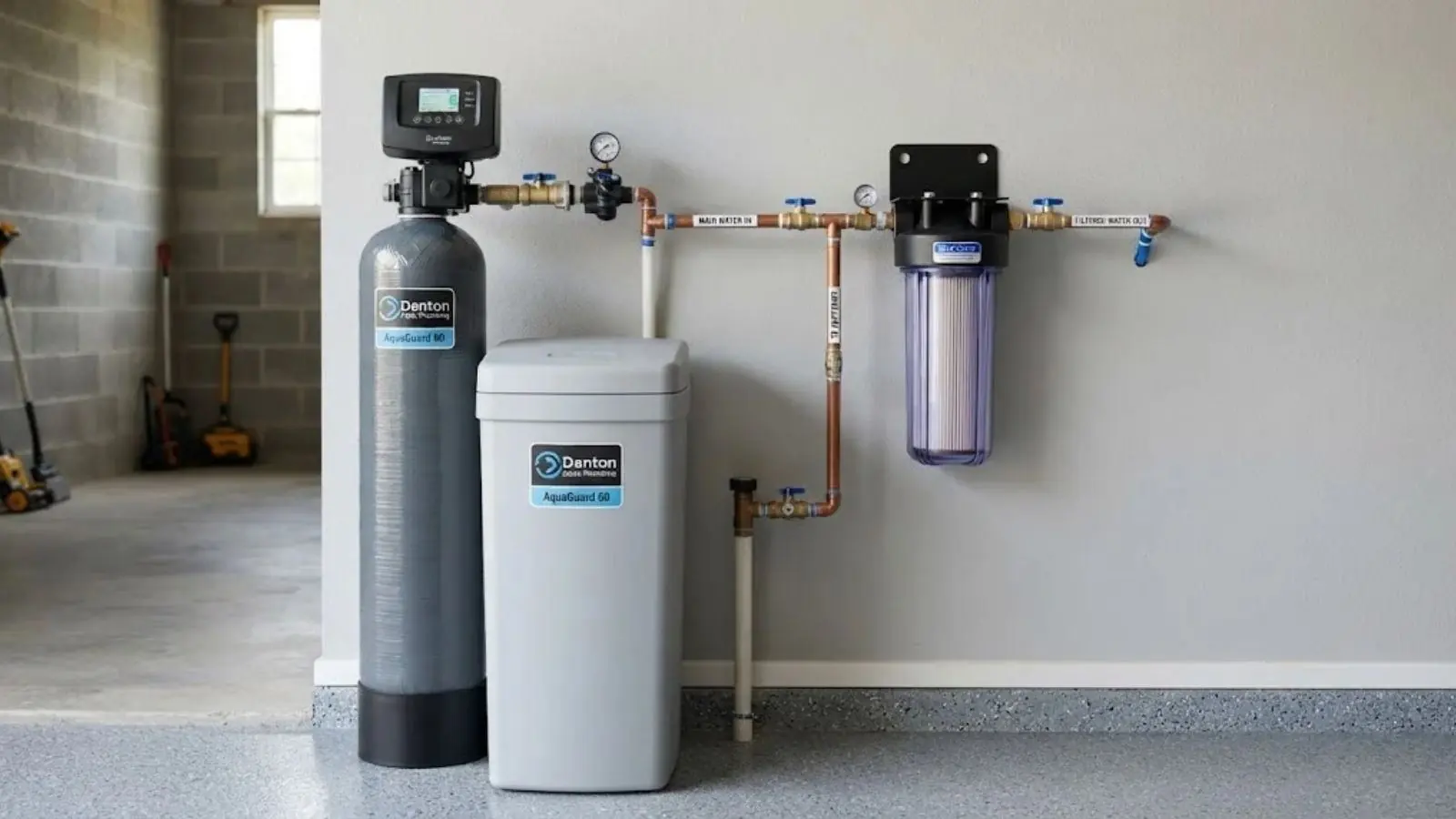
Water treatment starts with knowing what is in your water. Plantation Utilities treats groundwater from the Biscayne aquifer, and the city's own report describes membrane softening and chloramine disinfection.
That report does not list a hardness number, so a test at your own tap is the best place to begin.
Start with a test
A simple home test or a lab test shows hardness, chlorine or chloramine presence and other points. Results guide the equipment. If your water is already soft at the tap, a softener adds little. If taste or smell is the complaint, filtration may be the better choice.
We install what the numbers support, and we avoid selling equipment you do not need.
Softeners, filters and what each does
| Equipment | What it addresses | Notes |
|---|---|---|
| Salt-based softener | Hardness minerals that form scale | Needs salt refills and a drain connection |
| Carbon filter | Chlorine taste and odor | Cartridges or media need regular replacement |
| Sediment filter | Particles and grit | Often used ahead of other equipment |
| Reverse osmosis at one tap | Drinking and cooking water | Small unit under a sink |
Protecting appliances and fixtures
Scale builds inside water heaters, especially tankless units, and on faucet aerators and showerheads. Treating the water can reduce that buildup and extend appliance life. Our tankless water heater page explains why scale matters there.
Installation and upkeep
We install the equipment on the main line with bypass valves, a drain connection and an air gap where required. We explain refills, cartridge changes and settings. If equipment is already installed and not working, we can service it. For related work, see plumbing installation.
Signs your water may need treatment
- White scale on faucets and showerheads.
- Spots on glasses and dishes after the dishwasher.
- Soap that does not lather well.
- A chlorine or chemical taste or odor in tap water.
- Reduced flow in aerators and showerheads from mineral buildup.
Taste and smell are different from hardness
Hard water causes scale. Chlorine and chloramine cause taste and smell. A softener does not remove chlorine. A carbon filter does not soften water. Knowing which problem you have saves money, and we explain it plainly.
Maintenance you should expect
A salt-based softener needs salt topped up every few weeks and an occasional cleaning of the brine tank. Carbon filters need cartridges changed on schedule. Sediment filters clog faster in some homes than others. We explain what to check and how often, and we service equipment we did not install if you need help.
Where equipment goes
Whole house equipment is usually installed on the main line after the shutoff and before the water heater, so every tap gets treated water. Garages and utility rooms are common locations. The unit needs a drain, a power outlet for electronic controls and room to service it. We check those before you buy.
Codes and permits for this work
Plumbing in Florida is governed by the Florida Building Code, Plumbing, which is based on the International Plumbing Code (IPC). In practice, softener drains need an air gap, and the installation must follow the plumbing code. If you want to know what applies to your address, ask the dispatcher and we explain it before the visit.
What affects water treatment cost
Equipment type and the house layout drive the total.
- Equipment
- Softeners, whole house filters and reverse osmosis differ in price.
- Water test results
- What your water contains shapes what you need.
- Installation layout
- Distance to a drain and available space change the work.
- Ongoing costs
- Salt, cartridges and media are part of ownership.
You get a clear price in writing.
Want your real number? Call (954) 697-4920 and describe the problem.
Call the dispatch line and describe what you see. We will tell you what happens next.
Water softener and filter questions
The city's water quality report does not state a hardness number, so test your own tap. A home test kit gives a quick answer.
Only if your test shows hardness that causes scale or spotting. We help you decide.
Softening removes hardness minerals. Filtering removes things like chlorine, taste and sediment.
Cartridges are replaced on a schedule that depends on the model and your usage. We tell you the interval for your system.