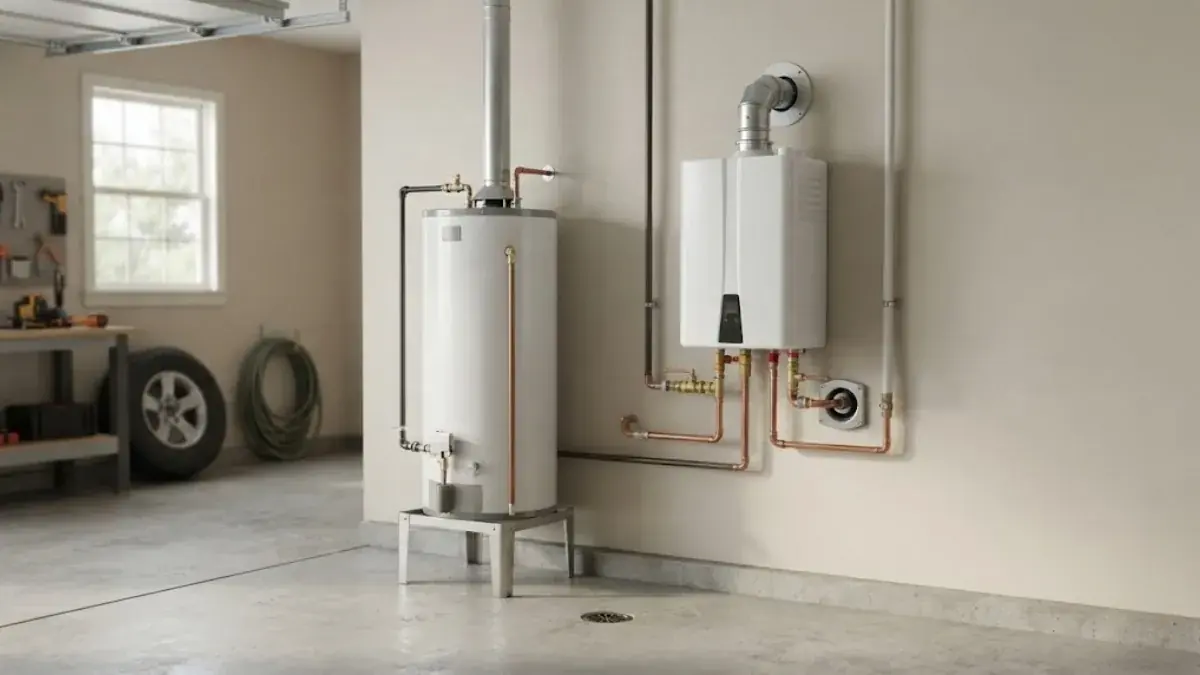
A heater that is leaking from the tank body cannot be repaired. The steel liner has failed, and the water is finding its way out. The fastest way back to hot showers is a replacement, and the most important step is limiting the water damage while that happens.
We bring the old unit out, set the new one, connect water, gas or power, test it and haul away the old tank. You pick the size and type with our guidance, and we tell you what the city requires.
If the tank is leaking, do this now
Close the cold water valve on top of the heater and cut power or gas to it. If the leak is heavy, shut the main water valve too. Drain pans catch drips, but they do not hold a full tank, so pump or mop standing water out of the area quickly.
Then call us. We prioritize a leaking tank over a unit that has simply gone cold.
Choosing the replacement
Most homes can keep the fuel type they have, which keeps the cost down. Switching from a tank to a tankless model changes the venting, gas line size or electrical load, so we review that on a visit. Our pages on water heater installation and tankless heaters cover those choices.
| Option | Good fit when | Things to know |
|---|---|---|
| Same fuel, same size tank | The household is happy with its current capacity | Fastest path, least change to connections |
| Larger tank | Hot water runs out during busy mornings | Needs enough space and a proper base |
| Heat pump or hybrid unit | You want lower electric use | Needs clearance and airflow around the unit |
| Tankless | You want continuous hot water | May need gas line, vent or electrical upgrades |
The Plantation permit process
Replacing a tank water heater needs a permit in Plantation. The city runs a same-day permit program for existing single-family homes that includes a plumbing water heater checklist, and the contractor must be registered in the city system. We handle the permit paperwork as part of the job and tell you what inspection to expect.
Florida's humid climate and the minerals in local water both affect how long a tank lasts, so we also set the temperature and expansion control properly on the new unit.
What happens on replacement day
- We shut off water and power or gas, then drain the old tank.
- We disconnect and remove the unit, then check the drain pan, valves and venting.
- We set the new heater, fit a new relief valve and discharge line, reconnect supply lines and test for leaks.
- We fire or power the unit, confirm temperature and show you the shutoff points.
Codes and permits for this work
Plumbing in Florida is governed by the Florida Building Code, Plumbing, which is based on the International Plumbing Code (IPC). In practice, a replacement needs a permit, and the relief valve and discharge line must meet code. If you want to know what applies to your address, ask the dispatcher and we explain it before the visit.
What to do first when the heater fails
- Turn off the gas or the breaker feeding the unit.
- Close the cold water valve on top of the heater if it is leaking.
- Do not touch the unit if water is near electrical parts.
- Open a hot tap to ease pressure, then call us.
What affects the cost of replacing a water heater
The unit itself is only part of it. Code requirements and the layout around the heater change the total.
- Type and capacity
- A basic tank, a heat pump model and a tankless unit sit in very different price tiers.
- Code upgrades
- Expansion tanks, relief valve lines, pans and vents may need to be added or corrected.
- Location
- An easy garage swap is simpler than an attic or tight closet with a long drain run.
- Permit and disposal
- Permit handling and removal of the old unit are part of the visit.
We give you a clear written price before work starts.
Want your real number? Call (954) 697-4920 and describe the problem.
Call the dispatch line and describe what you see. We will tell you what happens next.
Water heater replacement questions
A leaking one is, because a full tank can release dozens of gallons into your home. A heater that is simply cold is urgent but less dangerous. Shut the supply valve and call us, and we plan the quickest replacement path.
Often yes when we have the right unit available and the job is a straightforward swap. Larger conversions can take longer. Tell us your current type and we give you a realistic timeline.
Yes, a tank swap needs one. The city has a same-day permit option for qualifying single-family homes, and we handle the application as the registered contractor.
Many tank heaters serve for roughly a decade or somewhat longer, depending on water, sediment and maintenance. The data plate on your unit shows the manufacture date, and we can read it for you.