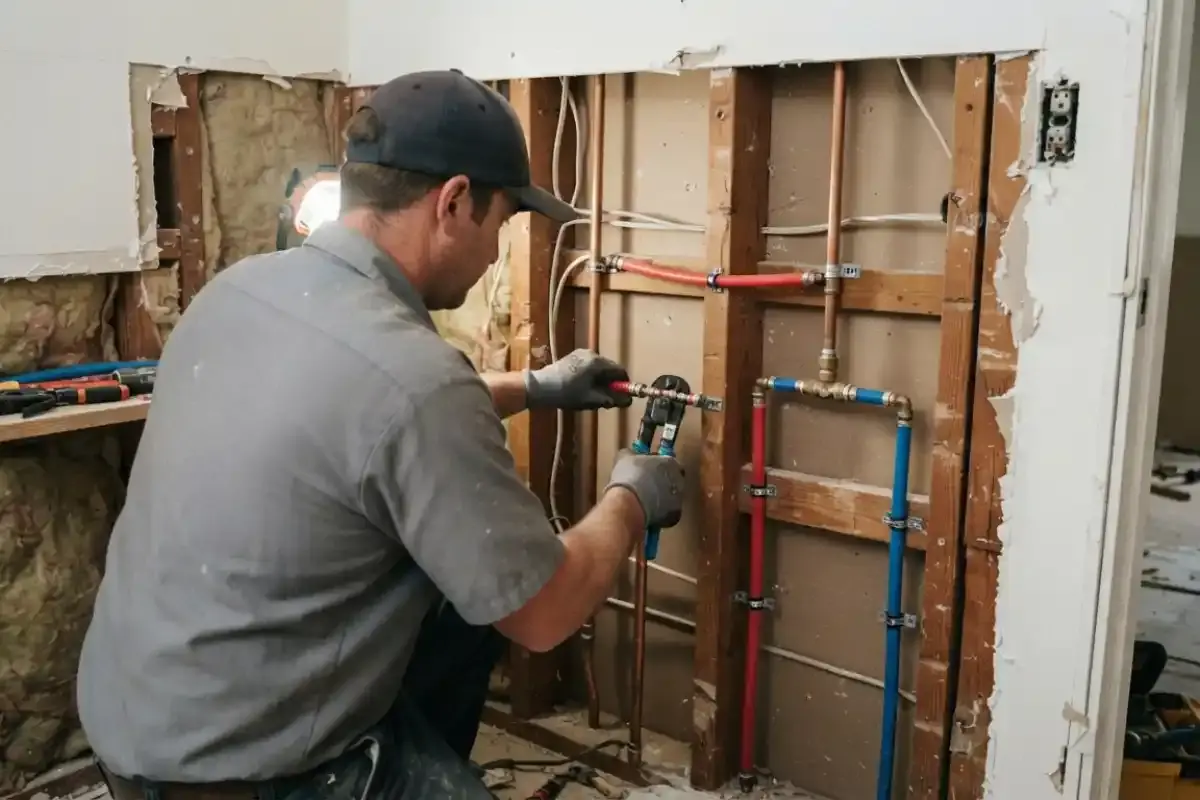
Repiping means replacing the water supply lines in a house with new pipe. It is a bigger project than a repair, and it is the right answer when the pipes themselves are the problem.
Plantation grew quickly from the 1970s through the 1990s, so many homes now have pipes of a certain age. Age alone is not proof of failure, but it explains why the question comes up.
Signs your pipes may be worn out
- Pinhole leaks that appear in more than one place.
- Rusty or discolored water, particularly when first opened.
- Low pressure that cleaning aerators does not fix.
- Pipes made of polybutylene or galvanized steel.
- Repeated repairs on the same system within a short time.
Which pipes are risky
Polybutylene
This gray plastic pipe was common in homes from the late 1970s to the mid-1990s. It is known for failing at fittings and for becoming brittle, so many owners replace it before it fails.
Galvanized steel
Older galvanized pipe corrodes from the inside and narrows over time, which lowers flow and discolors water.
Copper
Copper lasts a long time, but local conditions and workmanship can cause pinholes. A pattern of them signals trouble.
PEX or copper
PEX is flexible, fast to install and resists scale and corrosion. Copper is durable and long-established. We discuss both and recommend based on your house, access and budget. Both are accepted under the Florida Building Code Plumbing standards and require a permit and inspection.
How a repipe goes
We plan the route, protect floors and furnishings and open small access points in walls and ceilings. New lines are run, connected to fixtures and pressure tested. We then close access points and leave the area clean. A typical house takes a few days, and you may be without water for parts of each day.
If a single leak is the problem, leak detection or burst pipe repair may be all you need.
What to plan for at home
Clear access to closets, the attic and the areas under sinks. Plan for water to be off for part of each day. Protect valuables and tell us about pets. We cover floors and furniture and keep the site tidy. Drywall patches are made at the end of the work, and painting is usually separate.
Permits, inspection and warranty
Repiping is major work, and the city inspects it. We pull the permit, schedule the inspection and fix anything the inspector flags. Ask any contractor for a written scope, the pipe material and the workmanship terms before you sign.
Keep the permit record and the inspection sign-off with your home documents. They help at resale and for insurance.
Spot repairs compared with a full repipe
A repipe is a bigger upfront cost than fixing one leak, and a pattern of leaks usually costs more over time than the project. We lay out both choices in writing so the comparison is simple. If your pipes are sound, we say so and fix the leak. If they are not, we explain what the next few years look like with and without new pipe.
Codes and permits for this work
Plumbing in Florida is governed by the Florida Building Code, Plumbing, which is based on the International Plumbing Code (IPC). In practice, a repipe needs a permit and an inspection, and the new pipe must be listed for potable water. If you want to know what applies to your address, ask the dispatcher and we explain it before the visit.
What affects repiping cost
Repiping cost grows with the size of the house and the work required to reach pipes.
- Size and layout
- More bathrooms, longer runs and two stories increase the work.
- Material
- PEX and copper carry different material costs.
- Access
- Slab homes, finished walls and tile affect how pipes are reached.
- Restoration
- Drywall patching and painting may be separate from the plumbing.
We provide a written price after a site visit.
Want your real number? Call (954) 697-4920 and describe the problem.
Call the dispatch line and describe what you see. We will tell you what happens next.
Repiping questions
Not automatically. Multiple leaks, polybutylene or corroded galvanized pipe usually justify it. A single leak may only need a repair.
Most homes take several days. We give a schedule once we see the layout.
Water may be off for part of each day. We try to limit the downtime and tell you in advance.
Yes. Repiping needs a permit and inspection, and we handle both.