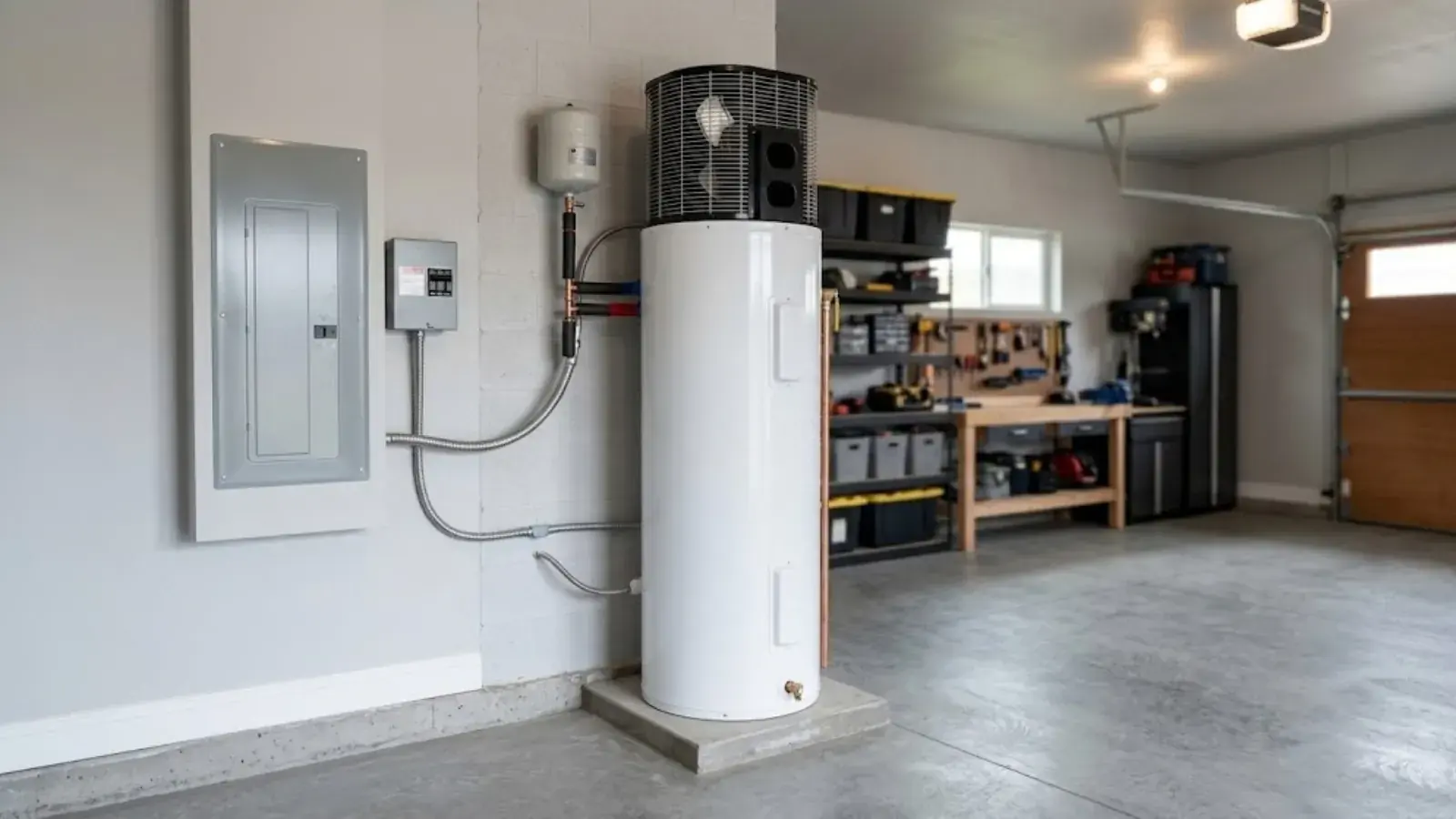
When a water heater fails, the first question is whether it is leaking. A tank that is wet at the bottom is usually finished. A tank that is dry but producing no heat is often a cheap part, such as a heating element, thermostat, thermocouple or igniter.
Call and tell us what you see. We ask a few short questions about the fuel type, the age on the data plate and any sounds or smells, then send a plumber who can handle that kind of failure.
Stop the water first, then call
If water is pooling around the base, shut the cold supply valve above the heater and turn off the power or gas. That limits the damage while you wait. For an electric unit, flip the breaker. For gas, turn the control knob to off.
A rotten egg smell near a gas heater is different. Leave the house, stay away from switches and call the gas utility from outside, then call us once it is safe.
Do not relight a unit that smells like gas
Pilot problems are common, but gas odor means someone should check the line before any flame is lit. We handle the repair after the area is safe.
Common failures we repair
Electric heaters
A failed upper or lower element is the usual reason for lukewarm water. Tripped high limit switches, bad thermostats and loose wiring at the terminals also show up. We test each part with a meter, so we replace only what is actually dead.
Gas heaters
Dirty pilot assemblies, weak thermocouples, failed gas valves and blocked flues cause most no-heat calls. A flue that does not draw properly is a safety issue, and we do not leave one running.
Tankless units
Scale on the heat exchanger, error codes, blocked intake filters and ignition faults are common. Our page on tankless water heaters covers flushing and maintenance in more detail.
Repair or replace the heater
A heater past its prime can still be worth fixing if the tank is sound. A leaking tank, a heavily corroded base or a unit that needs a second major part within a year usually points toward water heater replacement.
We tell you plainly which side of that line your unit is on. If repair makes sense, we do it. If not, we explain the replacement options and you decide.
Permits and Plantation requirements
Plantation runs a same-day permit program for water heater work on existing single-family homes, and the contractor has to be registered in the city system. Straight repairs of parts usually do not need a permit, but a tank swap does. We explain which one applies before work starts.
Keeping a repaired heater working
After a repair, a few habits keep the heater going. Flush the tank once a year to clear sediment. Check the relief valve for drips. Keep the area around the unit clear of boxes, and look at the drain pan now and then for dampness.
If the unit sits in a garage in a hot, humid climate, wipe down the exterior and watch for rust at the base. A rusty base is an early warning, and we are glad to look at it before it turns into a leak.
Codes and permits for this work
Plumbing in Florida is governed by the Florida Building Code, Plumbing, which is based on the International Plumbing Code (IPC). In practice, repairs that touch the gas, venting or relief valve are done to code and checked before we leave. If you want to know what applies to your address, ask the dispatcher and we explain it before the visit.
What drives water heater repair cost
A thermostat swap and a gas valve replacement are very different jobs, so we diagnose before we quote.
- Fuel type
- Electric, gas and tankless heaters use different parts and different test steps.
- The part that failed
- Elements and thermocouples are modest. Gas valves, control boards and heat exchangers cost more.
- Age and model
- Older units may need parts that take time to source, which can tilt the decision toward replacement.
- Location of the unit
- A garage tank is simple to reach. An attic or closet unit takes more time and may need extra protection for the floor.
We give you the repair price and the replacement alternative before anything is opened up.
Want your real number? Call (954) 697-4920 and describe the problem.
Call the dispatch line and describe what you see. We will tell you what happens next.
Water heater repair questions
A leaking tank is, because water damages flooring and drywall quickly. A heater with no hot water is urgent but not dangerous. A gas smell is a safety emergency and needs the gas utility first. Call us and we sort out which one you have.
On electric units, a failed lower element or a tripped high limit switch is the most common cause. On gas units, a weak burner or a dirty pilot assembly is common. We test and tell you which part is at fault.
Many repairs finish in one visit when the part is on the truck. Parts we need to order add a second visit, and we tell you that up front.
Usually yes. Popping often comes from mineral sediment at the tank bottom. A flush may help, but a heavily built-up tank may be near the end of its life, and we say so honestly.