Cast iron was the standard material for drains and sewer lines for decades. It is strong, quiet and fire resistant. It is also vulnerable to corrosion from the inside, and over time the walls scale, flake and thin out.
Lining is one way to renew the pipe without removing it. Our sewer line repair page covers when it is an option.
What pipe lining is
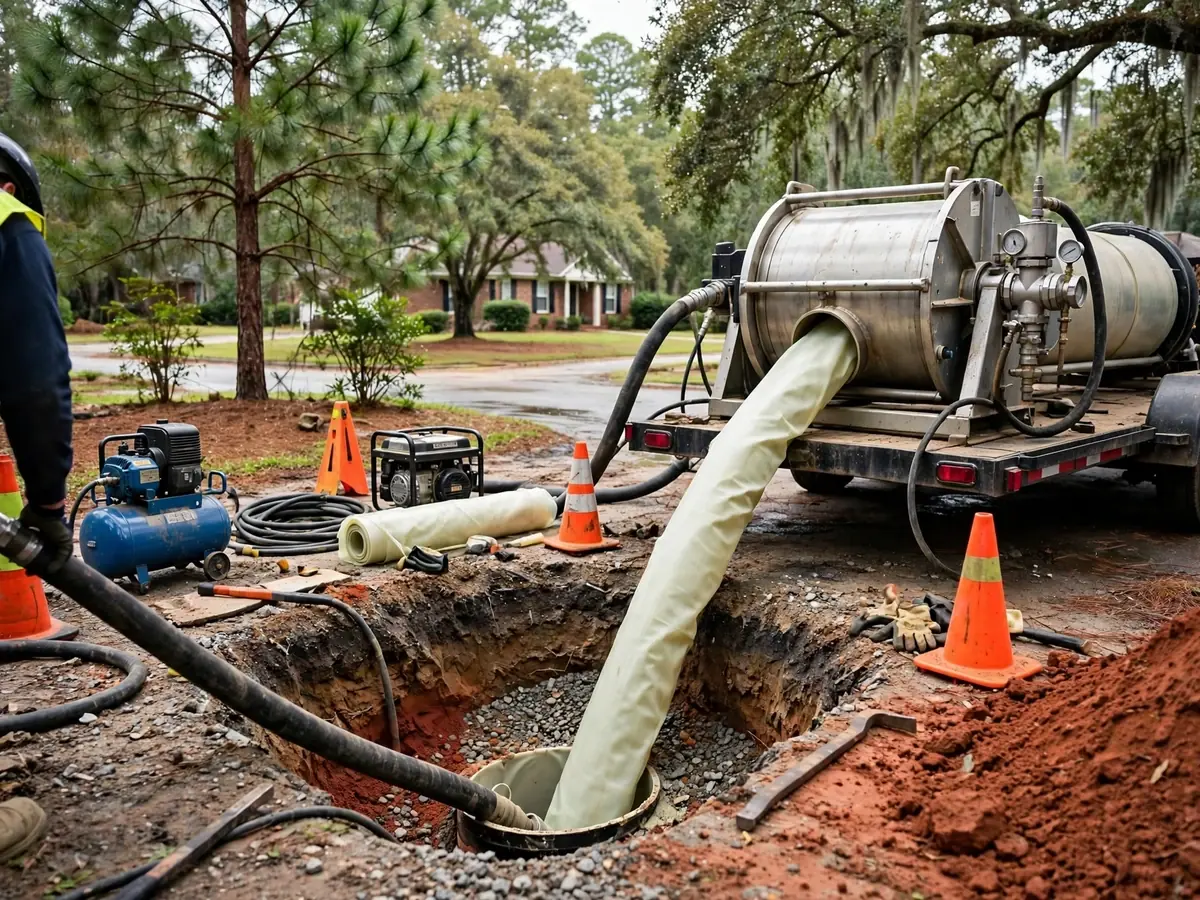
A flexible liner saturated with resin is pulled or inverted into the old pipe. It is inflated against the walls and left to cure, forming a new pipe inside the old one. The result is a smooth inner surface that resists scale and roots and seals small cracks and joints.
The crew cleans the pipe first, since the liner must bond to a clear surface. A camera check follows the cleaning and shows whether the pipe is a good candidate.
Signs your cast iron needs attention
- Repeated slow drains and backups in the same line.
- Rust-colored water or flakes when cleaning the line.
- A hollow sound or visible cracks in exposed pipe.
- Sewage smell near the pipe or under the slab.
- Camera footage that shows scale, pitting or a thin, rough interior.
When lining makes sense
It suits pipe that is rough and narrowed but structurally in place. It is attractive when the pipe runs under a slab, a driveway or a landscaped area where digging would cost a lot in restoration. It is common for building stacks, where opening walls is disruptive.
When replacement is the better answer
A collapsed section, a major offset or a severe belly cannot be restored by lining. A pipe that has lost its shape will hold a liner in the wrong form. In those cases, replacement of the damaged section is the more honest choice.
We use a camera inspection to tell you which path fits, and we do not push lining where it will not hold.
What the process looks like
- We clear the line with cable or hydro jetting to remove scale and debris.
- We run a camera and measure the pipe.
- We prepare the liner, insert it and cure it with air, water or steam as the system requires.
- We reopen the line, cut out any blockages at branch openings and run a final camera pass.
What lining cannot fix
- A pipe that has collapsed or lost its round shape.
- A section with a major offset or gap between pipes.
- A belly full of standing water, since lining follows the pipe's shape.
- A pipe with severe corrosion that has holes larger than the liner can bridge.
- Problems at fixtures and traps, which are outside the lined run.
Lining compared with replacement
| Lining | Replacement | |
|---|---|---|
| Digging | Little or none | Required |
| Time | Often shorter | Often longer |
| Surface restoration | Minimal | Can be extensive |
| Fit | Pipe that is rough but in place | Pipe that is collapsed or severely damaged |
| Inspection | Camera before and after | Camera and inspection of new pipe |
Permits and inspection
Work on drain and sewer lines may require a permit, and the contractor should know the rules for your property. Ask who pulls the permit, whether an inspection is needed and how the final camera pass is documented. We handle that process on the jobs we take.
Costs and value over the long run
Lining can cost less than replacement when the pipe is hard to reach, because digging and restoration add up. It is not always the cheaper option, and its value rests on the pipe being a good candidate. Ask for both options priced in writing, and ask what the warranty covers.
An honest contractor will tell you when lining will not hold, even if it costs them the job.
What you can do before the contractor calls
- Locate the cleanout and clear access.
- Note where backups happen and how often.
- Collect past repair invoices and camera footage.
- Check the age of the building and the drain materials listed in any inspection report.
- Ask your insurer whether the work is covered.
How long the whole process takes
The cleaning and camera stage often fills the first visit. Lining itself can take a day or so for a short run, with curing time depending on the product and the temperature. Long runs or multiple branches add days. We give a schedule once the camera shows the pipe, and we tell you which fixtures are out of service and when.
Lining in condos and multifamily stacks
In multistory buildings, a cast iron stack runs through walls and units. Lining it from the roof or a cleanout avoids opening finished walls in each apartment. It does require coordination with every owner on the stack and with the board. We explain the plan, the schedule and which units are affected before work starts.
Warning signs we look for first
Before we propose lining, we look for signs that it will work. The camera should show a pipe that holds its round shape and is free of large gaps. We also check the number of bends and branch connections, since many tight turns complicate the work. If the answer is no, we say so and discuss repair instead.
Codes that apply to lining
Florida follows the Florida Building Code, Plumbing, which is based on the International Plumbing Code (IPC). Ask whether a lining product is approved for your use and whether your jurisdiction requires a permit.
Questions to ask before you agree
Ask what material the liner is, how long it is warranted and whether branch connections are reopened. Ask whether the plumber will provide before and after footage. Ask how the product handles changes in pipe diameter.
Why age matters in Plantation
The City of Plantation's history page says the city was incorporated on April 30, 1953 and grew quickly through the 1970s to the 1990s as it annexed land to the west. Homes from different decades used different drain materials, so the age of your house is a clue about what is underground.
The city also reports 197 miles of gravity sewer mains, so the city side is in separate hands. For houses near the border, our crews also work in Lauderhill and Tamarac where older buildings use similar cast iron stacks.
Call the line, describe it, and we will say whether it can wait.
Cast iron pipe lining questions
Manufacturers cite long service lives, but the figure depends on the product and the condition of the host pipe. Ask for the written warranty.
No. Collapsed, badly offset or very small pipe may not qualify.
Slightly, because the liner has thickness. A smooth interior often keeps flow equal or better.
Plantation grew from the 1950s through the 1990s. If your house is older, its drains may be cast iron. A camera inspection shows what you have.