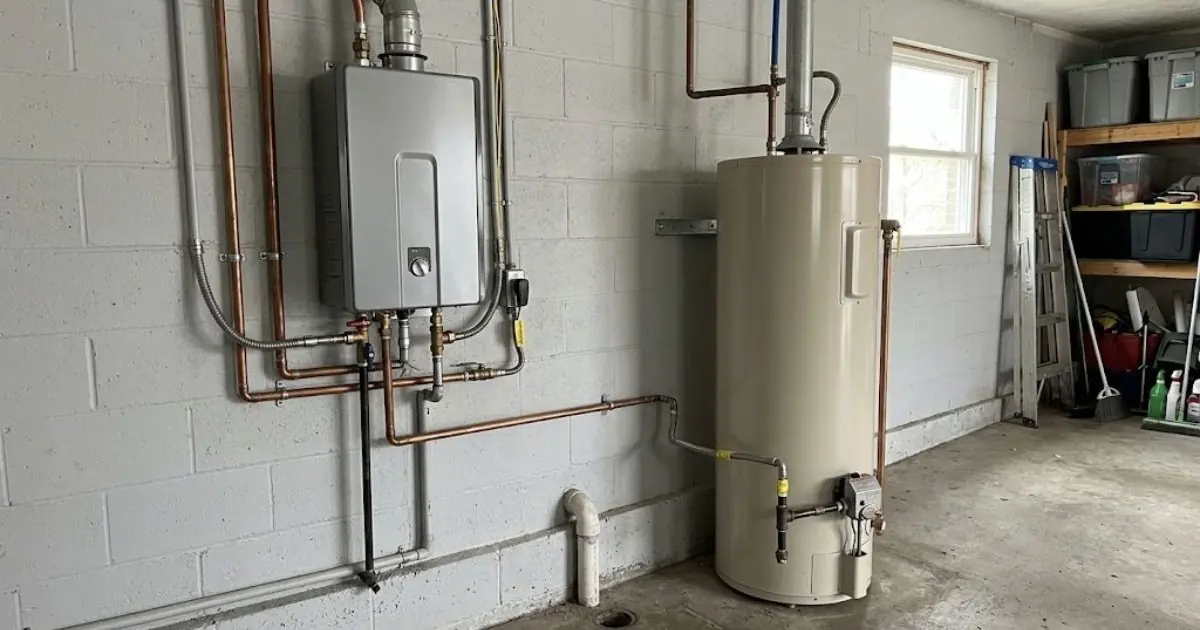
An on-demand heater has no storage tank. When you open a hot tap, flow sensors start a burner or heating elements, and the water is warmed as it passes through a heat exchanger. When you close the tap, the unit shuts off.
That design removes standby heat loss and the risk of a tank bursting. It also puts new demands on gas lines, venting and maintenance, which we cover on our tankless water heater page.
How the unit makes hot water
Gas units fire a burner under a heat exchanger, while electric units use heating elements. Both measure flow and temperature and adjust the output. The unit can deliver only so many gallons per minute at a set temperature rise, so capacity is a flow rating, not a tank size.
That matters when two showers and a dishwasher run at once. If the combined flow exceeds the rating, the water turns lukewarm.
What the house needs
- A gas line sized for the unit, since tankless burners draw more gas at once than a tank burner.
- A vent route that meets the manufacturer's rules, often through a sidewall.
- A condensate drain on high-efficiency models.
- Electrical power for the controls and fan, and for electric models, large dedicated circuits.
- A wall location with clearance and a way to service the unit.
Gas or electric
| Gas | Electric | |
|---|---|---|
| Output | Higher flow for whole-house use | Often best for a bathroom or a small home |
| Installation | Gas line and venting work | Heavy electrical circuits |
| Running cost | Depends on gas prices | Depends on electric rates |
| Maintenance | Flushing, filter checks | Flushing, element checks |
Pros and cons in plain terms
The plus side is continuous hot water, a smaller footprint and no tank to fail. The minus side is a higher upfront cost, installation complexity and the need for regular flushing. There is a short wait for hot water at the far tap, and some units struggle with very low flow rates.
If your current tank is failing and you have gas and a vent path, tankless is worth serious thought. If you are on a tight budget, a new tank may be the more practical choice.
Warm-up time and the wait at the tap
A tankless heater makes hot water on demand, but the water already sitting in the pipes between the heater and the fixture is cold. You wait for that to clear, just as you do with a tank. A recirculation pump or a small point-of-use unit can shorten the wait when a bathroom is far from the heater.
Some units also have a cold water sandwich effect when you turn the tap off and on quickly, because the pipes hold cooled water. It is brief, and it varies by model.
Questions to ask before choosing a unit
- What flow rate does it deliver at my temperature rise?
- What venting does it need and can my wall or roof support it?
- Does it have service valves for flushing?
- What are the warranty terms for the heat exchanger and the parts?
- How does it handle low flow, such as a single faucet turned slightly?
Costs beyond the unit
Installation can include a larger gas line, a new vent, a condensate drain, an electrical outlet and a permit. The unit price is only part of the total. A fair quote lists each of those items so you can compare options, and we give you that breakdown before we start.
Gas, electric and hybrid in a Florida home
South Florida has mild winters and warm groundwater, so the temperature rise needed is smaller than in colder states. That helps tankless performance, and an electric model may keep up better here than it would up north. Even so, the electric load is high, and the panel has to support it.
If your home runs on all-electric appliances, compare a tankless unit with a heat pump water heater, which sips electricity and handles Florida's warm garages well.
Who should keep a tank
A tank is a good fit when the budget is tight, when the house has no gas line and the panel cannot support an electric tankless model, or when the vent path is too complex. A tank is also simple to service and has a long history of reliability. Tankless is a good choice, not the only good choice.
What to expect on installation day
- We confirm the unit, gas or power and vent route.
- We shut off water and gas, then remove the old heater.
- We mount the new unit, run venting and connect water and fuel.
- We add service valves, condensate drain and electrical as needed.
- We test, set the temperature and walk you through the controls.
A conversion from tank to tankless may take most of a day, and the permit inspection follows.
Warranty and lifespan questions
Tankless units often carry longer warranties on the heat exchanger than tank heaters carry on the tank. The fine print matters, because some warranties require professional installation and regular service. Keep the receipt and the flush records. If the unit fails early, those documents decide the claim.
Codes and instructions to check
Florida follows the Florida Building Code, Plumbing, which is based on the International Plumbing Code (IPC). Gas sizing and venting also follow the manufacturer's instructions, and they vary by model.
Maintenance that keeps it working
Scale is the main enemy. A yearly flush with a descaling solution protects the heat exchanger. Clean the inlet filter and check the vent. We perform these visits, and our guide to water heater installation explains planning for a new unit.
Permits and water facts in Plantation
The City of Plantation runs a same-day permit program for existing single-family homes, with a plumbing water heater checklist, and the contractor must be registered in the city system. A tankless conversion falls under water heater work, so plan for a permit.
The city's water report does not list a hardness figure, so test your tap before choosing a maintenance schedule. Homes in Sunrise and Davie draw from other utilities, so results may differ.
Call the line, describe it, and we will say whether it can wait.
On-demand water heater questions
It provides hot water continuously as long as demand stays within its flow rating. Too many fixtures at once will exceed it.
It avoids standby losses, so many households use less energy. Savings depend on usage and fuel prices.
Gas, venting and permit requirements make it a licensed-plumber job.
The city's same-day permit program for existing single-family homes includes a water heater checklist. The registered contractor handles the application.