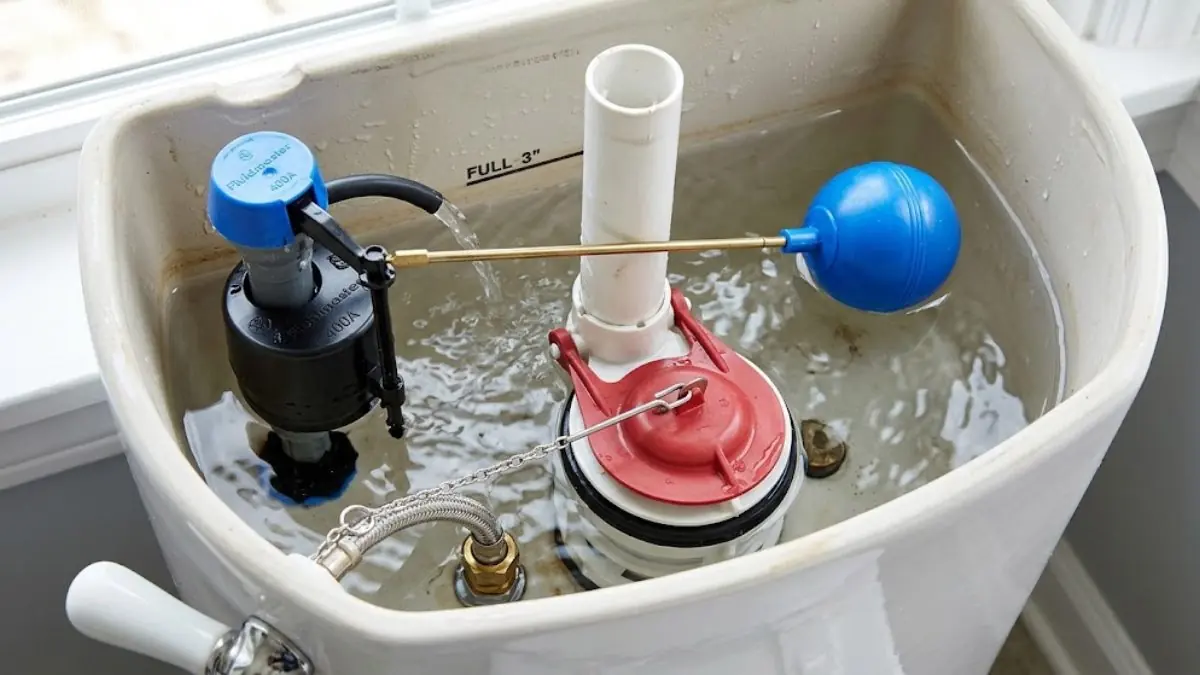
The float tells the fill valve when to stop adding water to the tank. When the float sticks, leaks or sits too high, the water keeps going and sends the excess down the overflow tube. You hear a hiss, you see ripples in the tank and the water bill creeps up.
Here is how to identify the float type, adjust it and decide when to bring in help from our toilet repair team.
Find out which float you have
Lift the tank lid and look. A ball float sits on the end of a long metal or plastic arm. A cup float slides up and down the fill valve shaft. A float switch on a rod is common on newer valves. Each style adjusts differently, so identify yours first.
Check the water level
The water line should sit about an inch below the top of the overflow tube. Many tanks have a mark on the inside wall. A level above the tube sends water straight down the drain, and a level that is too low gives weak flushes.
Flush the toilet and watch the refill. If the valve keeps running after the tank is full, the float is not closing it.
Adjusting each type
Ball float
Bend the arm slightly down to lower the water level or up to raise it. Some models have a screw at the valve for adjustment. A ball that has filled with water needs replacing.
Cup float
Squeeze the spring clip on the pull rod and slide the cup down to lower the level or up to raise it. Release the clip to lock it.
Float switch
Turn the adjustment screw on top of the valve. Clockwise usually lowers the level on many designs, but check the label on yours.
When the float is not the problem
A worn flapper can leak water from the tank to the bowl, which makes the fill valve cycle on and off. Add a few drops of food coloring to the tank, wait fifteen minutes and see if color shows in the bowl. If it does, replace the flapper.
A fill valve with a cracked seal can also fail to shut off. Replacing the valve costs little in parts and takes under an hour.
Replacing the fill valve
- Shut off the supply valve behind the toilet and flush to empty the tank.
- Disconnect the supply line and unscrew the locknut under the tank.
- Lift out the old valve, set the new one at the correct height and tighten the locknut.
- Reconnect the line, turn on the water and adjust the float until the level sits below the overflow tube.
Telling a float problem from a flapper problem
The two look alike from the bathroom doorway. A float problem shows up as water running into the overflow tube, with the level reaching the top of the tube. A flapper problem shows up as the tank level dropping slowly and the valve kicking on every so often to refill it.
Listen. A steady hiss is the fill valve and float. A short refill every ten to thirty minutes with no flush is almost always the flapper.
Tools and parts you may need
- A screwdriver and adjustable pliers.
- A replacement fill valve that fits your tank height.
- A universal flapper, or one matched to the brand.
- A small sponge and bucket for the last water in the tank.
- A new supply line if the old one is stiff or corroded.
Quick checks that save a repair
- Make sure the refill tube is clipped to the overflow tube and not stuck down inside it.
- Check that the chain on the flapper has a little slack and is not caught under the flapper.
- Clean the flapper seat with a cloth, since grit stops a good seal.
- Make sure the float or arm moves freely without rubbing the tank wall.
- Run the toilet a few cycles to confirm the fix holds.
Why a toilet keeps filling after you adjust the float
If the level is right and the toilet still hisses, the fill valve seal may be worn. Sediment under the diaphragm can also keep the valve from closing. Shut off the water, remove the valve cap and rinse the seal under a tap. If the rubber looks cracked or stiff, replace the valve.
A float that sits against the tank wall can also hold the valve partly open. Bend or reposition it so it floats freely.
Quick reference for a float repair
- Water at the top of the overflow tube: lower the float.
- Weak flush: raise the float or clean the flush holes.
- Hissing that never stops: check the float and the valve seal.
- Refill every few minutes: replace the flapper.
- Water on the floor: check the supply line and the tank bolts.
What to do before you open the tank
- Close the supply valve at the wall and flush to empty the tank.
- Do not use chemical tank tablets, which damage rubber parts.
- Lift the lid with both hands, because porcelain is heavy and chips easily.
- Replace worn parts with ones listed for your fill valve.
Signs to call a plumber
Call if the shutoff valve will not close, if there is water at the base of the toilet, if the tank is cracked or if the toilet keeps running after you replaced the parts. Corroded supply connections can break when disturbed, and we would rather replace them with the repair. If clogs are part of the story, drain cleaning may be needed.
What Plantation's water means for tank parts
The City of Plantation's water quality report says the disinfectant is chlorine with chloramines, and that the city draws from 16 wells reaching 110 feet into the Biscayne aquifer. Rubber flappers and fill valve seals sit in that water all day, so it is worth checking them every year.
The report does not list a hardness figure. If you see scale on parts, test your tap. Owners in Lauderhill and Tamarac often find that older toilets simply need new internals.
Call the line, describe it, and we will say whether it can wait.
Toilet float questions
A leaking flapper lets tank water slip into the bowl, and the fill valve refills it. Replace the flapper and test again.
About an inch below the top of the overflow tube, or at the mark inside the tank.
Yes. A toilet that runs constantly can waste many gallons a day without any visible leak.
The city's report names chloramines as part of the disinfection, and rubber parts are in constant contact with the water. The report does not say how fast they wear, so inspect flappers and seals yearly and replace them when they feel soft or look worn.